Hi there,
My mum was diagnosed on 23rd December with stage 4 cervical cancer, and we’re currently in the difficult waiting period before treatment starts. Since the diagnosis, she’s been struggling badly with nausea and vomiting. She’s now on her second type of anti-sickness medication, it makes her less sleepy, but she’s still barely able to eat, which is really worrying me in terms of her strength and ability to tolerate treatment.
She has very little energy, is struggling to drink enough, and we’re finding it hard to identify anything she can manage food-wise. She’s said no to eggs, cottage cheese, yoghurt, porridge, and anything chewy, as chewing seems to trigger her nausea. Today she managed a little bone broth, and I’ve brought over some protein powder to add to liquids.
I’m not sure how much of this is caused by the cancer itself, and how much might be shock and anxiety... she’s at the point where even thinking about food can trigger her gag reflex.
At the moment, the main thing keeping her going is Complan drinks, but she finds them very sweet and has always preferred savoury flavours.
Has anyone got suggestions for food or hydration that involves little to no chewing? I’m considering smoothies with silken tofu, but I’m not sure what else might work.
Is this level of nausea and vomiting common at this stage, and should I be contacting the oncology team about it? My dad feels very out of his depth, and they’re both so used to coping together and not asking for help. I want to support them without overstepping, but it’s hard to know what the right thing is.
Thank you so much for reading, any advice or shared experiences would really help.
Hi CareBearBlue and welcome to our group.
I’m sorry to read about your mum’s diagnosis, and appreciate that this is a very worrying time while you’re waiting for treatment to start. Do you know what the treatment will be? Unfortunately, nausea and vomiting can be a side effect of treatment itself once it starts, and it’s important to try to get this under control. There are numerous ant sickness medications which can be tried if one or more is not successful, and the treating team can advise on this.
It might be a combination of factors which is making it difficult for your mum to eat, but maybe you could get advice from your mum’s CNS (cancer specialist nurse) or consultant to get a referral to a dietitian?
Adding protein powder can be a good idea to get in some vitamins and minerals, as your mum will need to try to be in the best position to undergo any treatment. There are drinks like Ensure which can be prescribed, but these can also taste very sweet, so may not appeal. Have you tried pureeing food to make it easier to swallow?
Does the gag reflex happen with taking liquids as well as solid food? If your mum can swallow liquids more easily, smoothies can be an option, adding things like cream to increase calories.
I can appreciate you may not wish to be seen as interfering, but the most important thing is to try and get some nutrition into your mum, so please reach out to her team for help.
Sarah xx
Hi Sarah,
Thank you so much for your reply.
She’s definitely not drinking anywhere near enough. When I spoke to her today, she said she’d managed some fruit juice, but it’s children’s cartons diluted with water, so while there’s some sugar, there’s very little nutritional value. They don’t seem to be thinking about adding hydration or protein powders to drinks, even just to boost things slightly. She said it took her most of the morning just to manage licking a spoon of yoghurt.
I feel like she doesn’t really want to try things, possibly because she’s afraid of vomiting, and possibly because she’s just utterly exhausted. I’m also conscious that she’s always had a slightly complicated relationship with food. She’s been on many diets over the years, and when she’s been ill in the past she’s half-joked about losing weight. That makes me worry about how much this is physical versus psychological right now.
I’m particularly concerned about her mental state. Today she said she’d rather just have everything intravenously... almost as if she’s given up entirely on the idea of eating. I don’t think that’s how treatment works, and I’m frightened that this could affect her ability to start treatment, though I don’t know enough yet. She certainly hasn’t thought about that possibility.
She also doesn’t want to talk about the diagnosis or treatment at all. When she mentioned having a strange taste in her mouth and I said I’d read that chemo can cause a metallic taste and wondered about getting some decent plastic cutlery, she became upset and clearly didn’t want to go there. I came away feeling like I’d made things worse rather than better.
If anyone has been through something similar, particularly around nausea, food aversion, or the emotional side of eating at this stage, I’d really appreciate hearing how you navigated it.
Thank you again for listening.
Hi CareBearBlue
In my years as a member of the group, I haven’t come across anyone in a carer position speaking about the issues with food you are describing with your mum. Nausea and vomiting are usually discussed as a consequence of treatment, and most of us are or have been patients.
I’ve gone through chemotherapy, radiotherapy and major surgery for my own cervical cancer and recurrence, and all of those at some stage can cause nausea and vomiting, but they are physical rather than psychological reasons. You’ve said your mum has been diagnosed with stage 4, so the location of her cancer spread itself may be a physical reason for nausea and vomiting.
There are various options for treatment at stage 4, depending on the particular type of cervical cancer, but some of these forms of treatment will be intravenous-such as chemotherapy, immunotherapy or targeted therapy.
Getting nutrition and keeping hydrated will be critical to your mum’s ability to undergo any kind of treatment, and if she is too weak this could be an issue. If she doesn’t wish to discuss her diagnosis or treatment, would she be prepared to give you permission to discuss these things with her treating team? They will respect her confidentiality so will not discuss her situation without her permission, but I think things will be difficult if you don’t have all the information needed. You can of course convey your concerns to them at any time.
I have known a personal friend in a stage 4 position who was unable to eat due to her physical condition (we had the same major surgery after chemotherapy and radiotherapy) and she had to have what’s called parenteral nutrition (TPN) given via a tube for nutrition and hydration. So this is a very different situation to your mum’s, but was necessary for my friend due to her physical inability to eat or absorb any nutrition.
A metallic taste can occur with chemotherapy (personally I only experienced that on one occasion) but plastic cutlery would be helpful if you can get her to eat. Sharp tasting foods like pineapple can also help with a metallic tase-I ate small pineapple chunks.
I think you should definitely speak to the specialist nurse for your mum, or her consultant, particularly due to your worries about your mum’s mental state and her issues around eating. She will get weak quite quickly and her team will want to try to avoid this. Chemotherapy can be very hard on the kidneys, so keeping hydrated will be particularly important.
I had a lot of issues with cannula insertions during chemo through not being hydrated enough, as my veins were difficult to locate for the needles, which can be quite traumatic in itself and caused me significant bruising and discomfort.
Not keeping hydrated or taking in sufficient nutrition will absolutely affect her ability to undergo any kind of treatment. Is there an appointment arranged to discuss a treatment plan where you can be present?
Sarah xx
Hi Sarah,
Thank you so much for taking the time to reply again, I really appreciate you sharing both your personal experience and your perspective.
She’s already had an initial consultation about treatment options, and they’ve discussed immunotherapy, subject to blood tests, as well as chemotherapy. I wasn’t at that appointment, but my parents came away feeling really positive about it, which was reassuring.
This Monday she has a chemo preparation appointment at her local hospital (not where her consultant is based, as far as I understand), and I’ll be going with her to that. I’m hoping we may also hear more about the PET scan results then, as so far everything has been based on her MRI.
I think what’s throwing me most is how sudden the nausea and vomiting have been. She really did seem to go from being completely normal to barely able to eat in the space of a few days. I’m struggling to understand how much of this might be related to the cancer itself and how much could be her body’s response to the shock and stress of the diagnosis, particularly as she’s not able or willing to talk about it at all.
Your point about hydration and nutrition affecting her ability to tolerate treatment really resonates, and it’s what I’m most worried about right now. I have been planning to raise these concerns with the specialist nurse and at the chemo prep appointment. However, I’m also unsure how best to do this in front of my mum without upsetting her, as she finds any discussion about her illness or treatment very distressing at the moment.
Thank you again, your reply was very helpful.
Claire xx
I do also have a phone number for the oncology nurses at the larger hospital where her consultant is based. My dad said they were very clear at the time of diagnosis that they were happy to take questions from family members. My mum asked my dad to call and tell me the news about her diagnosis, but he understandably wasn’t really able to answer questions, so he passed the number on to me.
I did call a day later, but I actually ended up being given more information than my parents had at that point, which was quite difficult. For example, at that stage they hadn’t yet been told the cancer was stage 4, but that was information the nurse shared with me. I’m honestly still not sure whether my mum fully understands how she’s been staged, or whether she’s chosen not to engage with that information.
Because her care is currently split across two different hospitals, I’m finding it hard to know who the most appropriate person is to speak to, and how to raise concerns without either upsetting my mum or feeling like I’m going behind her back.
Claire xx
Hello
I'm sorry to hear that your mum has been diagnosed with stage 4 cervical cancer. It must be a very stressful time at the moment.
I just thought I’d give some ideas that helped me. Before I had a diagnosis of stage 2a2 I had lost a lot of weight, I went from a size 14-16 down to an 8-10. I had an about 3 months of worrying before my diagnosis so that didn’t help then around the time of diagnosis I couldn’t even face a couple of spoonfuls of food. I do think stress was a big part but also the cancer.
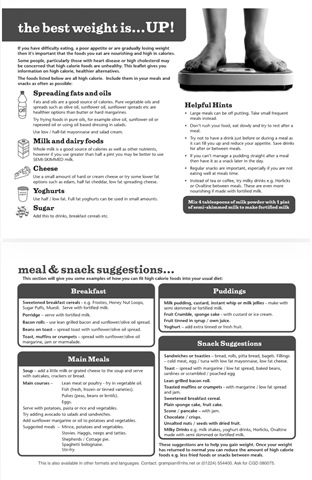
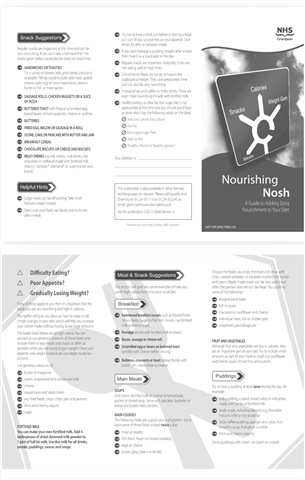
I spoke with my cancer nurse specialist who gave me advice of how to get extra calories etc so I’ll pop in the images she sent me by email. A big and easy one was adding extra teaspoons of fortified milk to my teas and coffees. But I can appreciate this may be harder if your mum isn’t even able to face it. 

I think if you are able to speak with your mums cancer nurse specialist or oncologist they will be able to get in touch with your mums GP to get a dietician and the GP to maybe get some sort of nutrition drink to her.
I do remember that feeling of just not being able to stomach food. It wasn’t nice sitting watching everyone eat and I’m just pushing the food around my plate. I can only imagine how much it must be amplified with your mum being stage 4. The cancer nurse specialist was quite upfront with me that I needed to keep strong to get through the treatment. I’m hoping she turns on the fight instead of the flight response xx
Whatever cancer throws your way, we’re right there with you.
We’re here to provide physical, financial and emotional support.
© Macmillan Cancer Support 2026 © Macmillan Cancer Support, registered charity in England and Wales (261017), Scotland (SC039907) and the Isle of Man (604). Also operating in Northern Ireland. A company limited by guarantee, registered in England and Wales company number 2400969. Isle of Man company number 4694F. Registered office: 3rd Floor, Bronze Building, The Forge, 105 Sumner Street, London, SE1 9HZ. VAT no: 668265007