For the newly diagnosed

  • 1 reply
  • 15 subscribers
  • 443 views

Hi All,

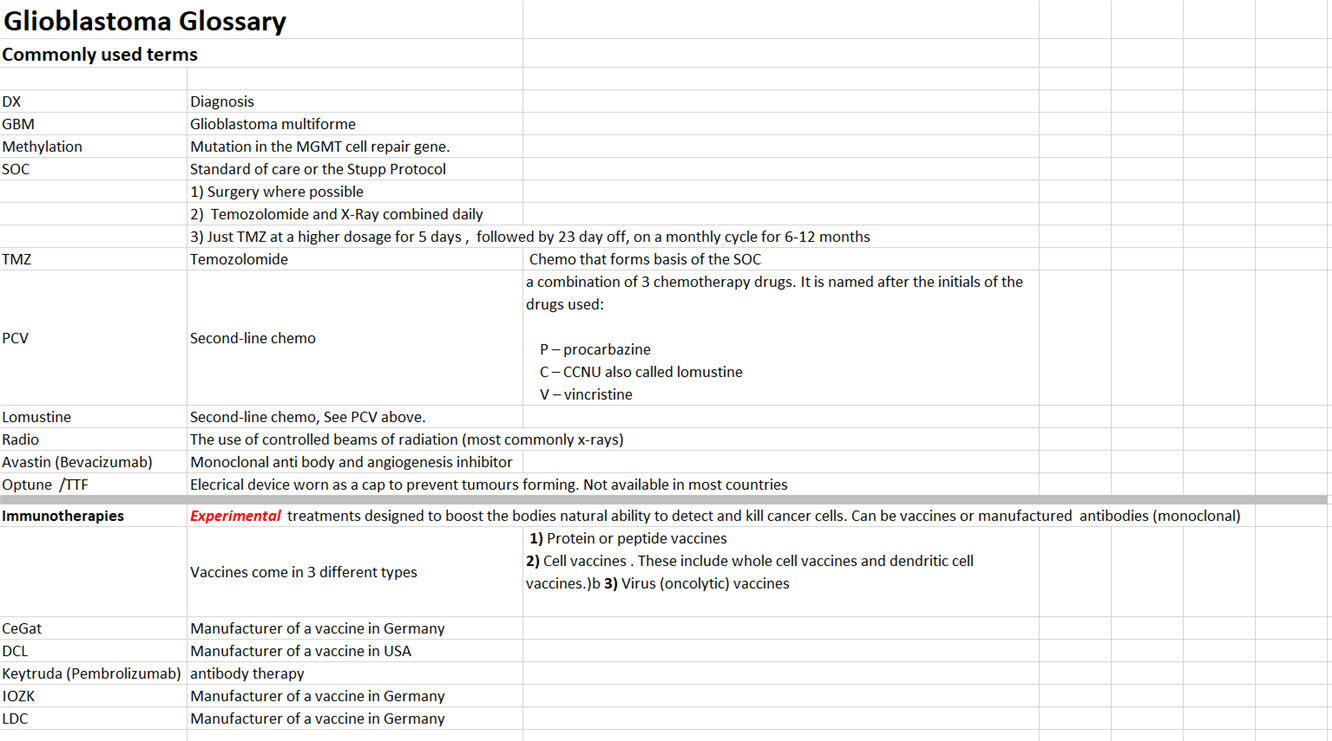
I have been a GBM patient for three years and nine months, and I have created a couple of documents on things that I wish I had known or asked back when this all began. Firstly a glossary.
Secondly a list of questions to ask your medical team.

QUESTION 1. MY TREATMENT TEAM. It is great that I am being offered multidisciplinary standard of care but who is the main specialist I will be dealing with on my GBM journey?

QUESTION 2. MY TREATMENT PLAN. Can you write out on a piece of paper what my treatment plan will look like for the next 3 to 6 months including how long will each phase of treatment last?

  • Can I have my whole tumour frozen to preserve it, should I decide to have immunotherapy
  • Can I go on holiday during my treatment? Do I need to tell you I have gone away on a holiday. Can I take a "holiday" [break] from my treatment if I need it.
  • If I am really not tolerating the chemotherapy or radiation, should I just stop it? Do I need to tell you? [Yes, please talk to your doctor. They have something they can to do help with the miserable side effects.]
  • What do I do if I am taking something like dexamethasone and the side effects are terrible, who should I contact?
  • If I feel like I need to go back on dexamethasone after I have weaned off it, do I need to talk to you first? [Yes, always talk to your doctor.]
  • How do I tell the difference between just the expected feeling bad from radiation or chemo treatment and feeling so terrible that I need to call you? What side effects should I or my caregiver be really worried about?

QUESTION 3. MY EMERGENCY SITUATION.

  • Who from my treatment team should I call in any emergency like a really bad seizure?
  • Which hospital should go to in an emergency [that you work with]? For example, is it just my most local hospital or do I need to come to my cancer treatment centre?
  • When I get to the right emergency hospital, who should I ask for?
  • If I am somewhere far from my home or visiting my family in another state, county or country, how can I access my medical records in an emergency?

QUESTION 4. MY MRI RESULTS.

  • You said my scan results look "good"/"bad'. Can you show me and explain to me what the MRI scan results mean.
  • Is there evidence of any new tumour growth or even growth of dead tumour [necrosis] that I or you should be worried about?
  • What is pseudoprogression?
  • How does this latest scan change my treatment plan?
  • After I complete this next part of my treatment plan, what might my next scan look like? (As my doctor, what do you hope to see in my MRI?] For example, should we be surprised or is it normal to see new necrosis due to the treatment I am receiving.

QUESTION 5. MY SCAN FREQUENCY.

  • In general, how often will my scans be at each point in my treatment plan? When have you scheduled my next MRI?
  • If I am worried about my health, can I ask you to move my scan date forward? Or should I talk to someone else about that?
  • How do I get a copy of my scan and MRI report?

QUESTION 6. MY SURVIVAL TIME BENEFITS.

What is the evidence that this treatment will give me longer time, and how much more time might be possible from this treatment?

QUESTION 7. MY QUALITY-OF-LIFE (QOL) BENEFITS AND RISKS.

  • How will my treatment impact (improve or potentially negatively affect) my quality of life?
  • What are the risks of this treatment?

(A personal note from Matt...) These are particularly good questions to ask before you decide to proceed with surgery.

For instance, for my second surgery a potential risk was numbness on my left hand. I decided that this risk and quality of life impact was much better than the risk of not taking the new tumor growth out and removing the necrosis that was negatively impacting my quality of life.

QUESTION 8. MY MEDICINE DURATION AND DOSE.

  • How long will I be on medicine X for. Will it always be the same dose? What can I do to prevent some of the side effects of medicine X?
  • For example, only through personal experience did I find out that taking dexamethasone can give you oral thrush (which I got). But it is so easily treated and prevented by doing a twice daily gargle with warm salty water. [Excellent advice!]
  • Which cancer nurse can I talk to if I am suffering from some mild medicine side effects like constipation or headaches?

QUESTION 9. MY MEDICINE SUPPLY.

I am almost finished with my chemotherapy, anti-nausea, anti-seizure ort other medicine. How do I get a new prescription? Can I just get that from my local doctors, or do I need to get that prescription from you?

QUESTION 10. MY FINANCIAL INFORMED CONSENT.

  • How much will this part of my treatment cost?
  • What financial support can I access to help pay any [out-of-pocket] costs?
  • [Where do I go? Who do I ask?]

QUESTION 11 BONUS QUESTION ON PALLIATIVE CARE.

I know that glioblastoma is terminal. I want me/my loved one to have the best end of life experience as possible, including having the best quality of life, and preventing and managing glioblastoma symptoms early. I have heard that an early engagement with my local community palliative care team can be beneficial to me as a patient and my career. How do I access that service now?


As always happy to answer any questions, or add to these two documents