
Well we are still here.

Time I put some more work into this blog.
I have been terribly lazy and not visited here for some weeks so I should get off my backside…or rather on it… back at the computer keyboard. In my defence Stan and I have been busy in the garden and poly tunnel and the bees have demanded more of our attention as the weather has warmed up.
I thought I might remind anybody reading this about the problems that they might find once they start radiotherapy.The following is stolen from The Memorial Sloane Kettering Cancer site which is American, of course, so I make no apologies for the spelling. I will return here tomorrow with my take on a few refinements and some tips I’ve picked up along my journey and that of others.
The whole site is fairly comprehensive and you can visit this particular page here https://www.mskcc.org/cancer-care/patient-education/radiation-therapy-head-and-neck-swallowing
Radiation Therapy to the Head and Neck: What You Need to Know About Swallowing
Many muscles and nerves work together to help you swallow (see Figure 1). When you eat and drink, food and liquids mix with your saliva. Your saliva makes the food soft and moist.
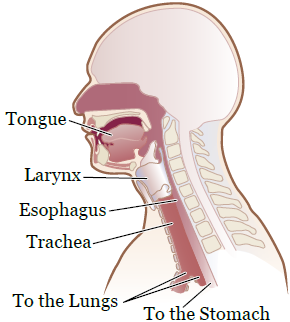
Chewing your food breaks it down. As you chew, the food and saliva form a ball called a bolus.
The bolus gets pushed to the back of your mouth with your tongue. Then, a reflex takes over and the back of your tongue pushes the food down. Your larynx (voice box) closes to prevent the food or liquid from entering your airway (trachea). The bolus then enters your esophagus (food pipe) and moves through to your stomach.
If the muscles you use to swallow or protect your airway are weak, food or liquid could enter your airway or lungs. This is called aspiration. Aspiration can lead to complications including pneumonia or respiratory infections (infection that affects your nose, throat, and airways).
Depending on the size and location of the tumor, your muscles and structures that support normal swallowing may weaken. They may not work as well as they did before you started radiation therapy. The side effects of treatment can also affect these structures.
Radiation therapy can cause:
These symptoms begin 1 to 2 weeks after you start radiation therapy and may get worse during treatment. Most symptoms will start to improve about 2 to 4 weeks after treatment has ended.
Radiation therapy can also cause permanent tissue scarring. The effects of this scarring depend on the area that was treated. Below are some effects of scarring.
Not everyone will have all of these problems. Your treatment will be planned to decrease your chances of developing them. Your healthcare team will also teach you things that you can do to help decrease these problems.
Other treatments can also affect swallowing. Surgery can affect parts of your mouth and throat, which could make swallowing more difficult. Some chemotherapy medications can cause sores in the mouth and throat. This can make swallowing painful.
If you have painful swallowing during your treatment, you will get pain medication to manage it. Take the medication as instructed by your doctor. If it doesn’t help, tell your doctor or nurse. There are many different medications that could be used to help manage your pain.
You will see a swallowing specialist before, during, and after your treatment. They will:
Your swallowing specialist will tell you when you should start these exercises. These exercises will help to prevent changes in your swallow function during your radiation therapy and help you keep your ability swallow over time.
For each exercise, do one of the following, as directed by your swallowing specialist:
Tongue hold exercise (Masako exercise)
Between each swallow, you can relax and move your tongue back to its normal position.
Effortful swallow exercise
To squeeze hard, you can pretend you’re swallowing something large, like a spoonful of peanut butter.
Mendelsohn swallow maneuver exercise
To pause during the swallow, you can pretend that you’re holding your breath in the middle of the swallow for 2 seconds before relaxing.
Supraglottic swallow exercise
Shaker exercise
Active range of motion and stretching exercises
Sit or stand. Hold your head still while doing these exercises.
Passive stretching exercise
Try the following suggestions if dry mouth or thick saliva is a problem for you: